
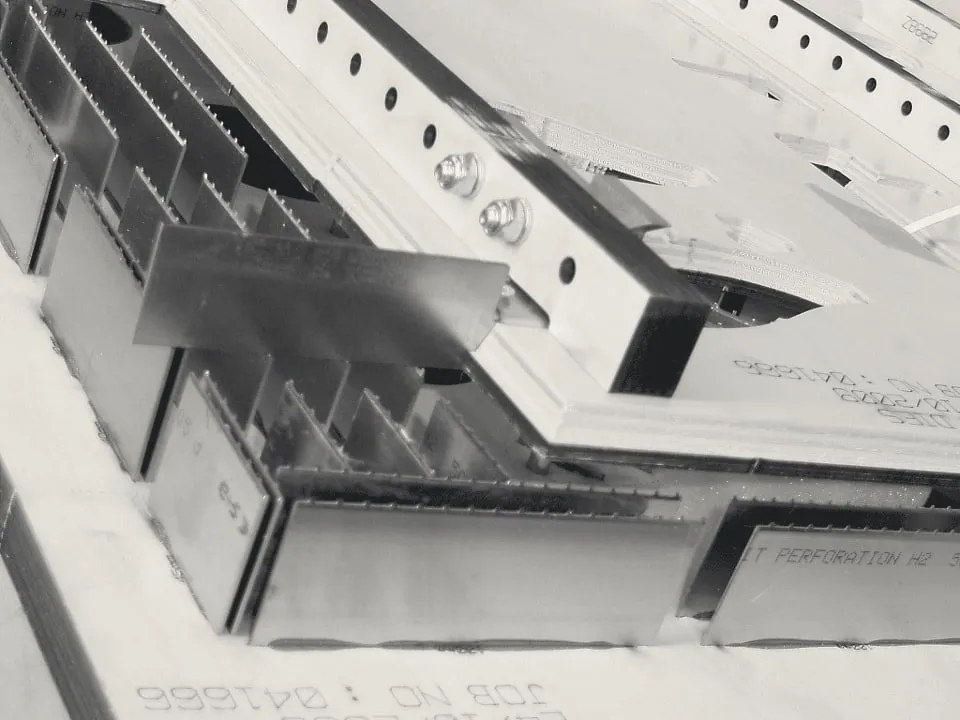
Die and stripping
A die with its stripping tooling. On an automatic platen, the stripping tools push the waste out of each cut sheet, so only the job goes on down the line.
Dies and tooling
What each one is and what it's for, in plain words. When you're ready, send us the drawing.
01
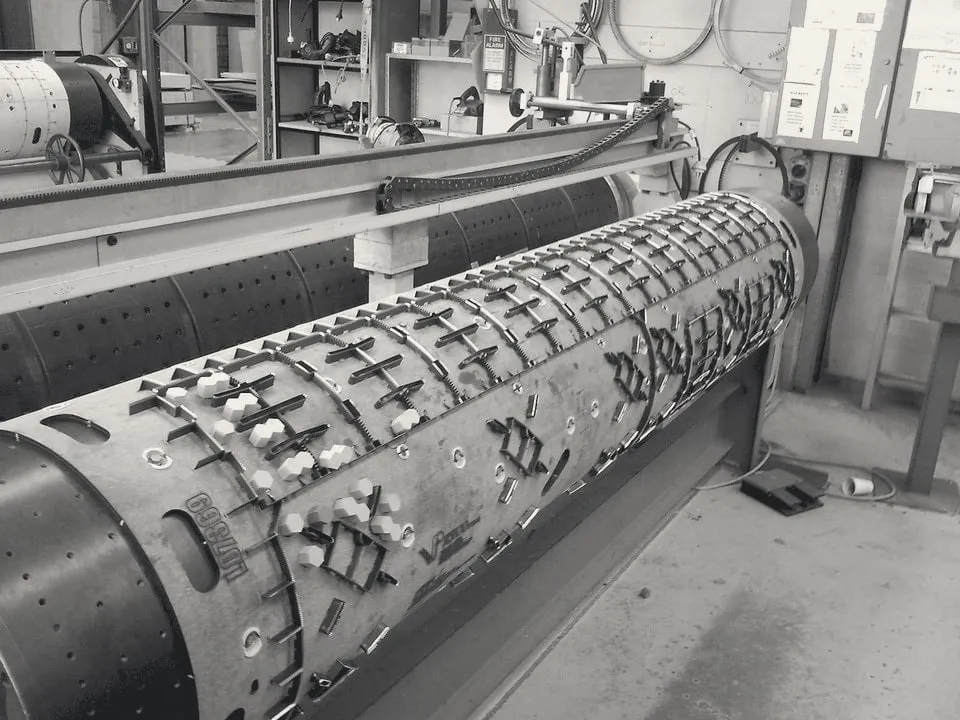
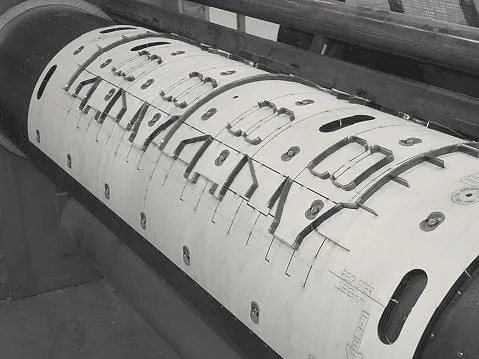
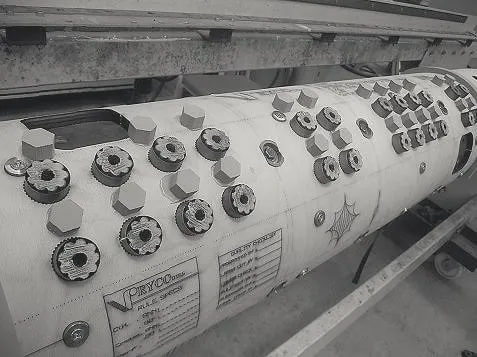
A rotary die is a curved plywood shell, laser cut and set with steel cutting and creasing rules. It bolts onto the die cylinder of a rotary die-cutter, and the sheet is cut as it runs between the die and the anvil.
Because it turns rather than stamps, a rotary die suits long runs at production speed. Rubber fitted beside the rules pushes the sheet off the blades as it comes through.
02
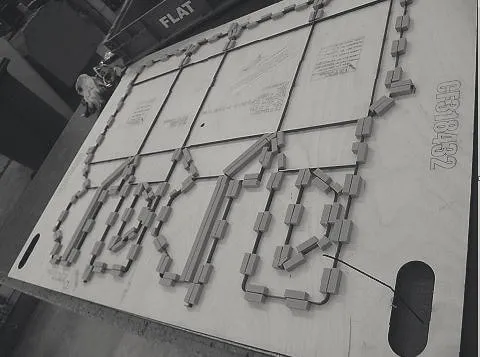
A flat forme die is a flat plywood board, laser cut to hold steel cutting, creasing and perforating rules. It runs on platen and flatbed die-cutters, cutting and creasing a whole sheet with each stroke.
Rubber along the rules pushes the sheet clear after each cut.
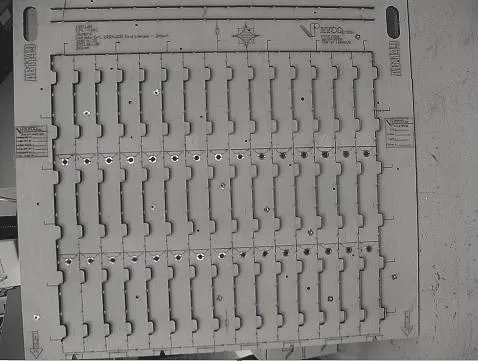
Flat forme dies made for automatic platen die-cutters.
03 to 05
A die with its stripping tooling. On an automatic platen, the stripping tools push the waste out of each cut sheet, so only the job goes on down the line.
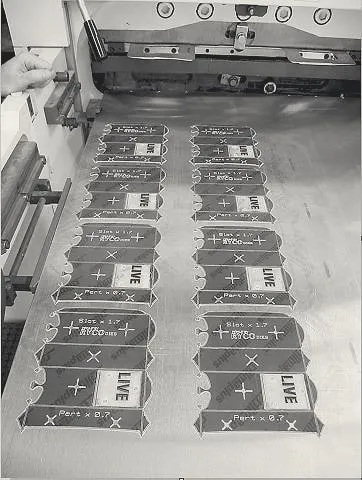
Counter plates in phenolic board that sit opposite the creasing rules. Each one is grooved to match the creases, so the board folds cleanly where it should.
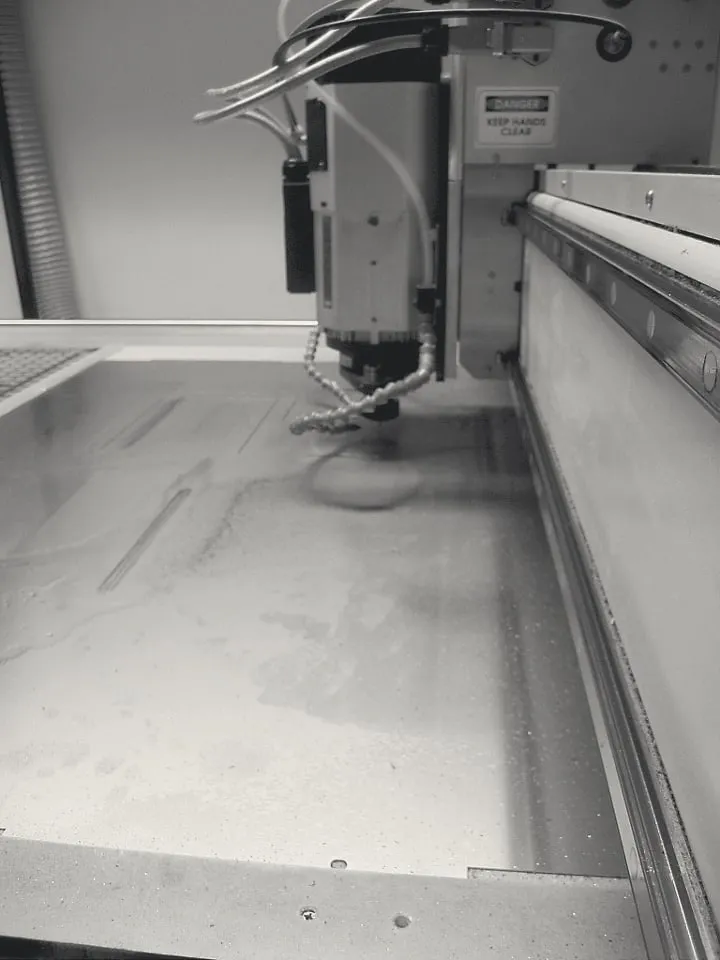
Stainless steel, milled to your drawing.
06
From your drawing to a die that's ready for the press, in three steps.
Step 01
A laser cuts narrow slots through the plywood wherever your drawing puts a cut, a crease or a perforation.
Step 02
Steel cutting, creasing and perforating rules are bent to the shape of each slot and pressed into the board.
Step 03
Ejection rubber is fitted along the rules, so the sheet comes away from the die cleanly on every cut.
Email it to orders@rycodies.co.nz, or call to talk it through.